How To Stretch Biceps
A practical step-by-step guide to how to stretch biceps, including preparation, instructions, common issues, tips, and next steps.
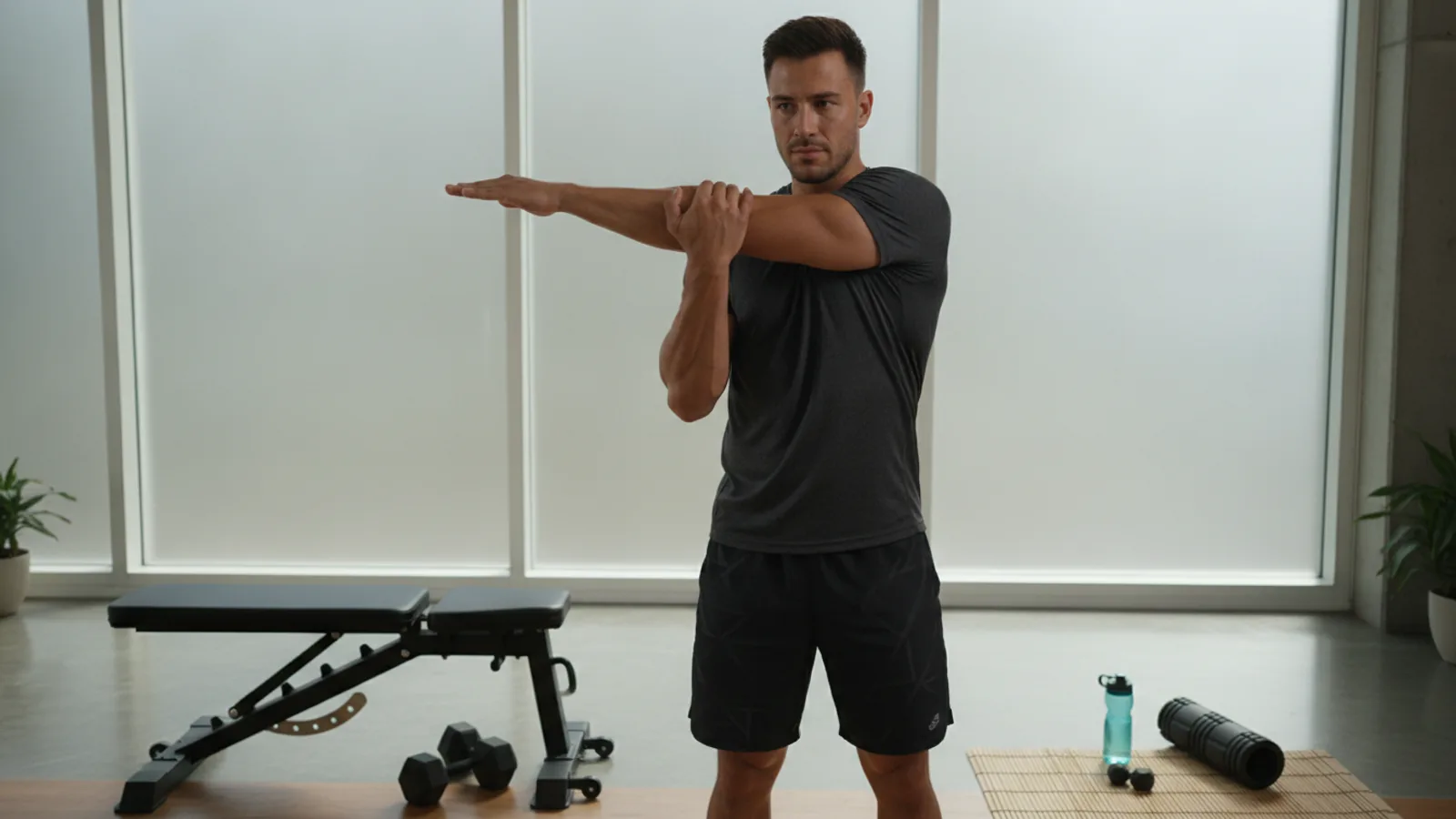
How To Stretch Biceps
Learning how to stretch biceps correctly is a simple yet powerful way to improve flexibility, reduce muscle soreness, and prevent injuries. Your biceps work hard during daily activities like lifting groceries and during workouts like pull-ups and curls. This guide provides clear, step-by-step instructions for several effective bicep stretches you can do at home, at the gym, or even at your desk. Following these techniques will help you maintain healthy, functional arm muscles and enhance your overall upper body mobility.
Fast Answer
- Best for beginners: The Standing Wall Stretch.
- Position: Extend your arm and press your palm against a wall.
- Action: Gently turn your body away from the wall.
- Hold Time: Hold for 20-30 seconds per arm.
- Key Feeling: A gentle pull along the front of your upper arm.
Before You Start
- Warm up your muscles: Never stretch cold muscles. Perform 5-10 minutes of light cardio like jogging in place, jumping jacks, or arm circles to increase blood flow to the area.
- Find a suitable space: You'll need enough room to extend your arms fully. A clear space near a wall or doorway is ideal for some of the best stretches.
- Wear comfortable clothing: Choose clothes that don't restrict your arm and shoulder movement.
- Listen to your body: A stretch should feel like a gentle, pulling sensation, not a sharp or stabbing pain.
Step-by-Step Instructions
Perform the Standing Wall Bicep Stretch
This is one of the most common and effective bicep stretches. It isolates the bicep well and allows you to easily control the intensity.
- Stand next to a sturdy wall, about an arm's length away.
- Extend the arm you want to stretch straight out to your side, parallel to the floor.
- Place your palm and inner elbow flat against the wall with your fingers pointing behind you. Your arm should be at or slightly below shoulder height.
- Keeping your arm straight and your hand pressed into the wall, slowly turn your torso away from the wall. You will start to feel a stretch in your bicep and possibly your chest and shoulder.
- Stop when you feel a comfortable tension. Hold this position for 20-30 seconds while breathing deeply and evenly.
- Slowly turn back towards the wall to release the stretch. Repeat on the other arm. Aim for 2-3 sets per side.
Use a Doorway for a Double Bicep Stretch
The doorway stretch is excellent because it allows you to stretch both biceps simultaneously and opens up the chest muscles, which often get tight along with the biceps.
- Stand in an open doorway.
- Raise your arms out to your sides, bent at a 90-degree angle, like a goalpost. Place your palms and forearms on the doorframe.
- Keeping your back straight and core engaged, take a small step forward with one foot.
- Lean your body forward through the doorway until you feel a stretch across your chest and the front of your arms (biceps).
- Ensure your shoulders are relaxed and not creeping up toward your ears. Your elbows should be at or slightly below shoulder height.
- Hold the stretch for 20-30 seconds. Do not bounce.
- Step back to the starting position to release. You can perform 2-3 repetitions.
Try the Seated Bicep Stretch
This stretch can be done on the floor or in a chair without arms. It's great for improving posture as it also stretches the front of the shoulders and chest.
- Sit on the floor or on the edge of a stable chair with your knees bent and feet flat on the ground.
- Place your hands on the floor or chair behind you, about a foot away from your hips. Your fingertips should be pointing away from your body.
- Keeping your arms straight, slowly slide your hips forward, away from your hands. This will increase the stretch in your biceps and chest.
- Keep your chest lifted and your back straight throughout the movement. Avoid letting your shoulders round forward.
- Hold the position for 20-30 seconds, breathing normally.
- Carefully slide your hips back to the starting position to release the tension. Repeat 2-3 times.
Perform the Interlaced Fingers Bicep Stretch
This is a simple stretch you can do anywhere, even sitting at a desk. It requires no equipment and effectively targets the short head of the bicep muscle.
- Stand or sit tall with a straight spine.
- Bring your hands behind your back and interlace your fingers with your palms pressing together.
- Keeping your back straight, slowly straighten your elbows and lift your arms away from your body.
- Lift your arms only as high as you comfortably can without leaning your torso forward. You should feel a stretch in your biceps and across the front of your shoulders.
- Squeeze your shoulder blades together to help open your chest.
- Hold for 20-30 seconds while maintaining deep, steady breaths.
- Gently lower your arms and unclasp your fingers to release the stretch. Repeat 2-3 times.
Use a Tabletop for a Supported Bicep Stretch
This variation uses a stable surface like a desk or table to provide support and control. It's a gentle way to ease into a deeper bicep stretch.
- Stand facing away from a sturdy table or countertop that is about hip height.
- Reach one arm behind you and place your palm flat on the table's surface, with your fingers pointing away from you.
- Ensure your arm is straight, but do not lock your elbow.
- Slowly walk your feet forward or bend your knees to lower your body, increasing the stretch. Your hand should remain stationary on the table.
- You will feel a stretch along your bicep and into your forearm. Keep your shoulder relaxed and down.
- Hold for 20-30 seconds.
- Carefully straighten your legs or walk back toward the table to release. Switch arms and repeat.
Quick Reference
| Situation | Use This Stretch | Why |
|---|---|---|
| At the office | Interlaced Fingers Stretch | It's discreet, requires no equipment, and can be done while sitting. |
| After a workout | Doorway Stretch | It effectively stretches both biceps and the chest, which are often worked together. |
| If you have tight shoulders | Seated Bicep Stretch | It gently opens the front of the shoulders while targeting the biceps. |
| For a deep, isolated stretch | Standing Wall Stretch | It allows you to easily control the intensity and focus on one arm at a time. |
Common Problems When You Stretch Biceps
Even with simple movements, it's possible to run into issues. Here’s how to troubleshoot common problems when you stretch your biceps.
Feeling Pain Instead of a Stretch
A stretch should create tension, not sharp pain. If you feel a pinching, stabbing, or painful sensation, especially in your shoulder or elbow joint, you are pushing too hard. Immediately back off the stretch to a point where you feel gentle tension or stop completely. Pain is your body's signal that something is wrong. Trying to "push through it" can cause a strain or tear.
Not Feeling the Stretch in Your Bicep
If you feel the stretch more in your shoulder or forearm, your form may be off. For wall stretches, ensure your arm is straight and your hand is positioned correctly (fingers pointing away or behind you). Focus on rotating your torso, not just pulling with your shoulder. For seated stretches, concentrate on keeping your chest lifted and sliding your hips forward to initiate the movement, rather than just leaning back.
Bouncing During the Stretch
Bouncing, or ballistic stretching, can be dangerous for static holds. It can trigger a muscle's stretch reflex, causing it to tighten and potentially tear. All the stretches described here are static stretches. Ease into the position and hold it steady. If you want to increase the intensity, do it slowly and gradually over several seconds.
Forgetting to Breathe
Many people unconsciously hold their breath when they feel tension. This deprives your muscles of oxygen and can make them tighter. Make a conscious effort to breathe deeply and continuously throughout the entire hold. Inhale through your nose, and as you exhale through your mouth, try to relax and sink a little deeper into the stretch.
Advanced Tips for Stretching Biceps
Once you've mastered the basic stretches, you can explore more advanced techniques to improve your flexibility and muscle recovery.
Incorporate PNF Stretching
Proprioceptive Neuromuscular Facilitation (PNF) is a more advanced form of stretching that involves both stretching and contracting the muscle group being targeted. A common PNF technique is "contract-relax."
- Get into a bicep stretch, like the wall stretch, until you feel mild tension.
- Instead of just holding, isometrically contract your bicep by trying to press your hand into the wall as if you're doing a bicep curl. Hold this contraction for 5-10 seconds. Do not actually move your arm.
- Relax the contraction completely, and then gently push deeper into the stretch. You should find that your range of motion has increased.
- Hold this new, deeper stretch for 20-30 seconds.
Add Myofascial Release
Before stretching, you can use a foam roller or a massage ball to release knots and adhesions in the bicep muscle tissue. Lay on your side on the floor with a small foam roller or massage ball placed under your bicep. Gently roll back and forth from your elbow to your shoulder. If you find a tender spot, pause on it for 20-30 seconds until the tension releases. This can make the subsequent static stretch more effective.
Integrate Bicep Stretches into a Full Routine
Your body works as a system. Tightness in one area often relates to tightness in another. Combine your bicep stretches with stretches for your chest (pectoralis), front of the shoulders (anterior deltoids), triceps, and forearms. A balanced flexibility routine for your entire upper body will yield better results than just focusing on one muscle.
How To Stretch Biceps FAQ
How long should I hold a bicep stretch?
For static stretching, the general recommendation from the American College of Sports Medicine (ACSM) is to hold a stretch for 15-30 seconds. Holding for less than 15 seconds may not be enough to create lasting change in the muscle tissue. Holding for longer than 60 seconds has not been shown to provide significant additional benefit and can sometimes cause irritation. Aim for that 20-30 second sweet spot for 2-4 repetitions per arm.
Should I stretch my biceps before or after a workout?
It's best to perform static bicep stretches after your workout. Stretching a "cold" muscle before exercise can temporarily reduce its power output and may even increase the risk of injury. Before a workout, focus on dynamic stretches, which are active movements that take your muscles through their full range of motion. Examples include arm circles, arm swings, and torso twists. Save the long, static holds for your cool-down.
How often should I stretch my biceps?
If you regularly perform exercises that target the biceps, like curling, rowing, or climbing, you should stretch them after every session. For general flexibility and maintenance, aiming to stretch your major muscle groups, including the biceps, at least 2-3 times per week is a good goal. If you have a desk job where your arms are constantly bent, performing a quick bicep stretch once or twice during the day can help relieve tension.
Can stretching make my biceps weaker?
Static stretching immediately before an activity that requires maximal strength can cause a temporary, small decrease in performance (a phenomenon known as "stretch-induced strength loss"). However, this effect is short-lived. A regular, long-term stretching program performed during your cool-down does not make muscles weaker. In fact, by improving range of motion and promoting recovery, it can contribute to better long-term strength gains and muscle health.
What's the difference between the long head and short head of the bicep?
The biceps brachii muscle has two parts, or "heads." The long head runs along the outside of your upper arm, and the short head runs along the inside. While most stretches will target both, you can emphasize one over the other with small adjustments. Stretches where your arm is behind your body (like the seated stretch) tend to emphasize the long head more. Stretches with your arm out to the side (like the wall stretch) can target both heads effectively.
Final Checklist for Stretching Biceps
Use this checklist to ensure you're getting a safe and effective stretch every time. A consistent and mindful approach is the key to improving your flexibility.
- Warm-Up First: Did you perform at least 5 minutes of light cardio to warm up your muscles before stretching?
- Choose the Right Stretch: Did you select a stretch that you can perform with good form and without pain?
- Ease Into It: Did you move into the stretch slowly and avoid any bouncing or jerky movements?
- Check Your Form: Are your shoulders relaxed? Is your back straight? Are you isolating the bicep muscle?
- Hold for the Right Duration: Are you holding the stretch for a steady 20-30 seconds?
- Breathe Deeply: Are you taking slow, even breaths throughout the entire hold?
- Listen to Your Body: Did you stop immediately if you felt any sharp pain? Remember, no pain, more gain.
- Stretch Both Sides: Did you remember to stretch both arms equally to maintain muscular balance?