1gm Protein How Many Calories
A practical step-by-step guide to 1gm protein how many calories, including preparation, instructions, common issues, tips, and next steps.
1gm Protein How Many Calories
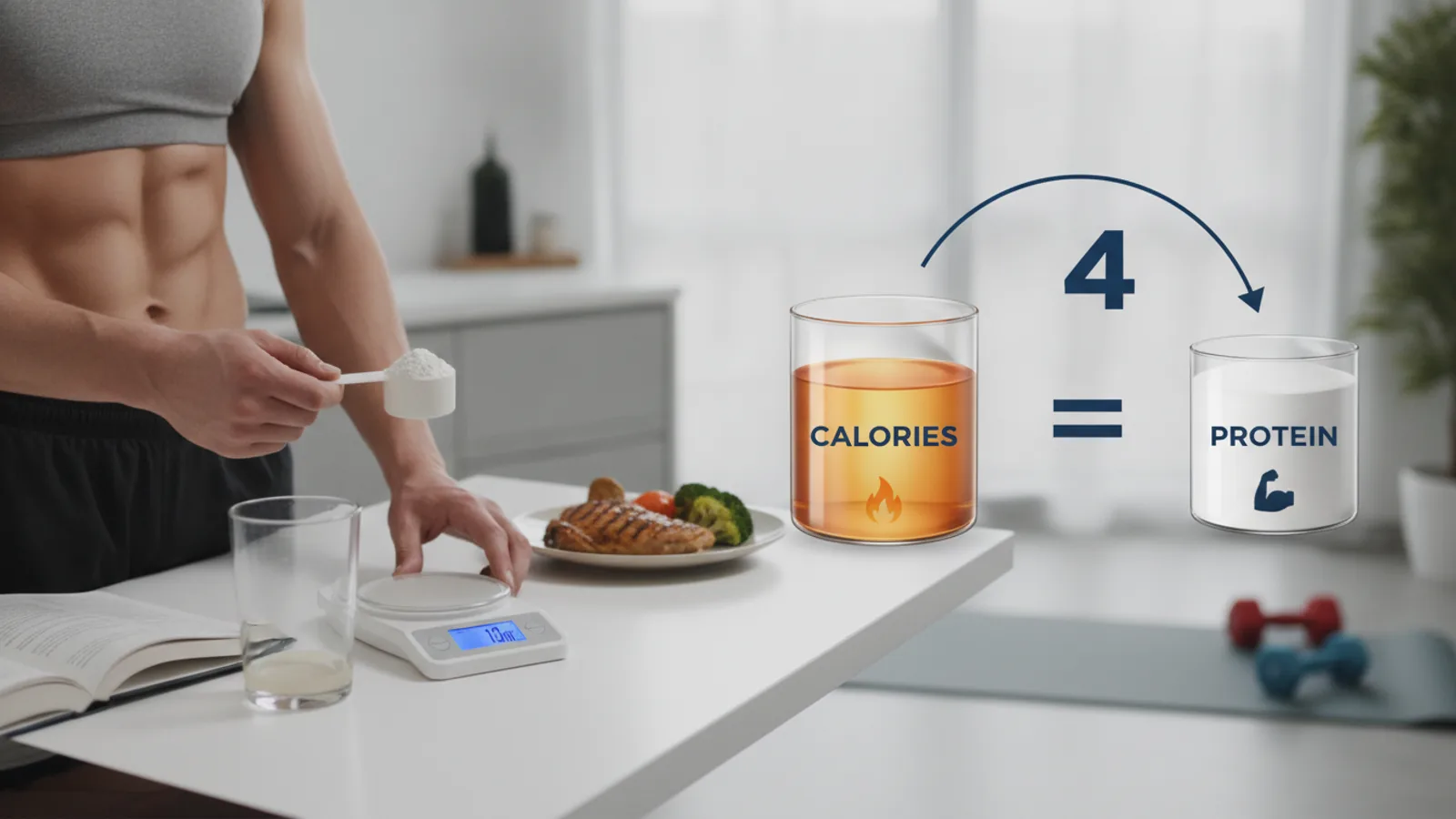
Understanding the calorie count in protein is a fundamental step toward mastering your nutrition. This guide answers the core question—how many calories are in one gram of protein—and shows you how to apply that knowledge. Whether you're tracking macros for muscle gain, managing your weight, or simply want to make more informed food choices, learning to calculate protein calories will give you precise control over your diet. We'll walk you through reading food labels, calculating calories for entire meals, and using this skill to meet your specific health and fitness goals.
Fast Answer
- Calories per Gram: 4 calories
- Macronutrient Type: Protein
- Primary Body Function: Building and repairing tissues, enzymes, and hormones
Before You Start
- A food item with a Nutrition Facts label: This will be your practical example. A can of tuna, a protein bar, or a container of Greek yogurt works perfectly.
- A calculator: Your smartphone's calculator app is all you need.
- A notebook or tracking app: A place to log your calculations if you plan to track your intake over time.
How to Calculate and Use Protein Calories
Find the Grams of Protein on a Food Label
The first step is to locate the necessary information. Pick up your food item and find the Nutrition Facts panel. This is the black-and-white box required on most packaged foods in the U.S. Within this panel, scan down past the "Total Fat" and "Total Carbohydrate" sections until you see the line for "Protein". The number next to it, measured in grams (g), is the value you need.
Pay close attention to the "Serving Size" and "Servings Per Container" listed at the very top of the label. All the nutritional information, including the protein grams, applies to a single serving. If you eat the entire container, you'll need to multiply the protein grams by the number of servings to get your total.
Multiply the Protein Grams by Four
This is the core of the calculation. The universally accepted standard, based on the Atwater system used for nutrition labeling, is that 1 gram of protein provides 4 calories. The formula is simple:
Grams of Protein × 4 = Calories from Protein
Let's use an example. Imagine you have a cup of Greek yogurt. The label says it has 20 grams of protein per serving. To find out how many calories come from protein, you perform this easy calculation:
20g of protein × 4 = 80 calories from protein.
This means that of the total calories in that serving of yogurt, 80 are provided exclusively by its protein content. It's a straightforward multiplication that you can apply to any food.
Calculate the Percentage of Calories from Protein
Knowing the raw number of protein calories is useful, but understanding its proportion of the food's total calories provides even more context. This helps you identify high-protein foods at a glance. To do this, you'll need the total calories per serving, also found at the top of the nutrition label.
The formula is:
(Calories from Protein ÷ Total Calories) × 100 = Percentage of Calories from Protein
Continuing with our Greek yogurt example: The label says the total calories per serving is 120 calories. We already calculated it has 80 calories from protein.
(80 ÷ 120) × 100 = 66.7%
This tells you that two-thirds of the calories in this yogurt come from protein, making it a very protein-dense food. This percentage is a powerful tool for comparing products and choosing foods that align with your goals.
Apply the Calculation to a Complete Meal
Individual foods are one thing, but we usually eat meals. To find the total protein calories in a meal, you simply apply the calculation to each component and then add them up. This is essential for accurate daily tracking.
Let's build a sample dinner meal:
- Grilled Chicken Breast (4 oz): ~35g of protein
- Quinoa (1 cup, cooked): ~8g of protein
- Steamed Broccoli (1 cup): ~4g of protein
First, find the total grams of protein for the meal:
35g + 8g + 4g = 47g of total protein
Next, convert this total to protein calories:
47g × 4 = 188 calories from protein
This single meal provides 188 calories dedicated to muscle repair, satiety, and other vital functions performed by protein. Doing this for every meal gives you a complete picture of your daily intake.
Use Protein Calories to Meet Your Daily Goals
The ultimate purpose of this knowledge is to help you structure your diet to meet specific targets. Health organizations often recommend protein intake as a percentage of total daily calories, typically between 10% and 35%. Your personal needs will vary based on your age, activity level, and goals.
Here's how to set a target. Let's say your goal is a 2,000-calorie diet and you want 25% of those calories to come from protein.
- Calculate your target protein calories: 2,000 calories × 0.25 = 500 calories from protein per day.
- Convert those calories into grams: 500 calories ÷ 4 = 125 grams of protein per day.
Now you have a concrete, measurable goal. As you calculate the protein calories in your meals throughout the day, you can track your progress toward hitting that 500-calorie (or 125-gram) target.
Understand How Your Body Uses Protein Calories
Not all calories are processed by the body in the same way. Protein has a higher Thermic Effect of Food (TEF) than carbohydrates and fats. This means your body has to burn more energy (calories) just to digest, absorb, and process the nutrients in protein.
Roughly 20-30% of the calories in the protein you eat are used up during its digestion. For fats, it's only 0-3%, and for carbohydrates, it's 5-10%. So, if you eat 100 calories from protein, your body only gets a net of about 70-80 of those calories. This metabolic advantage, combined with protein's ability to make you feel full and preserve muscle mass, is why high-protein diets are often successful for weight management and body composition goals. While you still count the full 4 calories per gram for tracking purposes, understanding TEF helps explain *why* protein is so effective.
Quick Reference
| Your Primary Goal | Recommended Daily Protein Intake | Why It Works |
|---|---|---|
| General Health & Maintenance | 0.8 - 1.2 grams per kg of body weight | Maintains essential body functions, repairs cells, and prevents muscle loss associated with aging. |
| Weight Loss / Fat Loss | 1.6 - 2.2 grams per kg of body weight | Increases satiety (fullness), preserves lean muscle mass in a calorie deficit, and has a higher thermic effect. |
| Muscle Gain & Strength | 1.6 - 2.2 grams per kg of body weight | Provides the essential amino acids (building blocks) needed to repair and build new muscle tissue after exercise. |
Common Problems When Calculating Protein Calories
While the math is simple, a few common mistakes can throw off your calculations. Here’s what to watch out for and how to fix it.
Forgetting to Check the Serving Size
This is the most frequent error. You might calculate the protein for a single serving of chips (e.g., 2g) but accidentally eat the entire "family size" bag, which contains 10 servings. Your actual protein intake would be 20g (80 calories), not 2g (8 calories). Always check the "Servings Per Container" and multiply accordingly if you eat more than one serving.
Dealing with Inaccurate Food Labels
Food labeling regulations allow for a certain margin of error (often up to 20%). A product labeled with 20g of protein could legally contain anywhere from 16g to 24g. For most people, this small variance averages out over a diverse diet and isn't a major concern. However, if you are a competitive athlete or on a strict medical diet, be aware that these numbers are close estimates, not absolute certainties.
Not Accounting for Cooking Methods
The protein content of a food doesn't change much with cooking, but the total calorie count can. If you take a lean chicken breast (mostly protein) and fry it in a cup of oil (pure fat), the final meal's total calories will be much higher. Your protein calorie calculation for the chicken is still correct, but you must also account for the calories from the added fats to get an accurate total for the meal.
Misunderstanding Raw vs. Cooked Weights
When tracking whole foods like meat, use the raw weight for the most accurate protein count. Meat loses water and fat during cooking, causing it to shrink. A 4 oz (113g) raw chicken breast might weigh only 3 oz (85g) after cooking, but it still contains the protein from the original 4 oz portion. Most nutrition tracking apps allow you to specify whether you are logging a food as "raw" or "cooked" to ensure accuracy.
Advanced Tips for Tracking Protein Calories
Once you've mastered the basics, these tips can help you achieve greater accuracy and efficiency in your nutrition tracking.
Use a Digital Food Scale for Ultimate Precision
For any food that doesn't come with a nutrition label—like fresh fruits, vegetables, and meat from the butcher—a digital food scale is your most valuable tool. Guessing portion sizes is notoriously inaccurate. Measuring your chicken breast or scoop of protein powder in grams allows you to look up the precise nutritional information online or in a food tracking app, removing all guesswork from your calculations.
Learn to Estimate Portions Visually
While a scale is best, it's not always practical, especially when eating out. Learning some visual cues for portion sizes can help you make educated estimates.
- 3 oz of cooked meat, poultry, or fish: About the size of a deck of cards or the palm of your hand.
- 1 cup of food: Roughly the size of a baseball or your fist.
- 1 tablespoon of peanut butter: About the size of your thumb.
Prioritize Protein Timing for Performance
For those looking to maximize muscle growth, timing can be a factor. While total daily protein intake is most important, many athletes benefit from distributing their protein intake evenly across 3-5 meals throughout the day. Consuming a protein-rich meal (around 20-40g of protein) within a couple of hours after a workout can also help kickstart the muscle repair and recovery process.
1gm Protein How Many Calories FAQ
Why does protein have 4 calories per gram?
Are all protein calories created equal?
How many calories are in 1 gram of carbohydrate and fat?
- Protein: 4 calories per gram
- Carbohydrates: 4 calories per gram
- Fat: 9 calories per gram
If I'm already counting total calories, do I need to count protein calories separately?
Final Checklist for Calculating Protein Calories
Use this quick checklist to ensure you're applying the concept correctly every time you plan a meal or look at a nutrition label.
- Confirm the standard conversion: 1 gram of protein = 4 calories.
- Always locate the serving size at the top of the nutrition label first.
- Multiply the total grams of protein in your portion by four to find the calories from protein.
- For unpackaged foods, use a digital food scale and a nutrition app for the most accurate protein gram count.
- Remember that the total calories listed on a label already include the calories from protein, fat, and carbs.
- Compare your daily protein calorie intake to your personal goals (e.g., 25% of total calories).
- Consider the source of protein to ensure you're getting a variety of essential amino acids.