How Long Does Protein Powder Last
A practical step-by-step guide to how long does protein powder last, including preparation, instructions, common issues, tips, and next steps.
How Long Does Protein Powder Last
Wondering if that giant tub of protein powder in your pantry is still good? You're not alone. While protein powder comes with a "best by" date, it doesn't instantly spoil the day after. This guide will walk you through a simple, step-by-step process to safely check if your protein powder is still effective and safe to consume, helping you avoid waste and protect your health.
Fast Answer
- Unopened Powder: Can last 12-18 months past its "best by" date if stored correctly.
- Opened Powder: Best used within 3-6 months of opening for optimal quality and safety.
- Key Factor: Proper storage in a cool, dark, dry place is crucial for extending its life.
Before You Start
Before you inspect your protein powder, gather a few simple items. This process is about using your senses to detect signs of spoilage. Having the right tools on hand makes the check quick and thorough.
- Your container of protein powder
- A clean, completely dry spoon or the original scoop
- A clear glass or shaker bottle
- A small amount of water or milk
- A well-lit area to perform your inspection
Step-by-Step Instructions
Follow these steps in order to safely and accurately determine if your protein powder is still good. Each step acts as a safety check, starting with the most obvious signs of spoilage.
Step 1: Locate and Interpret the "Best By" Date
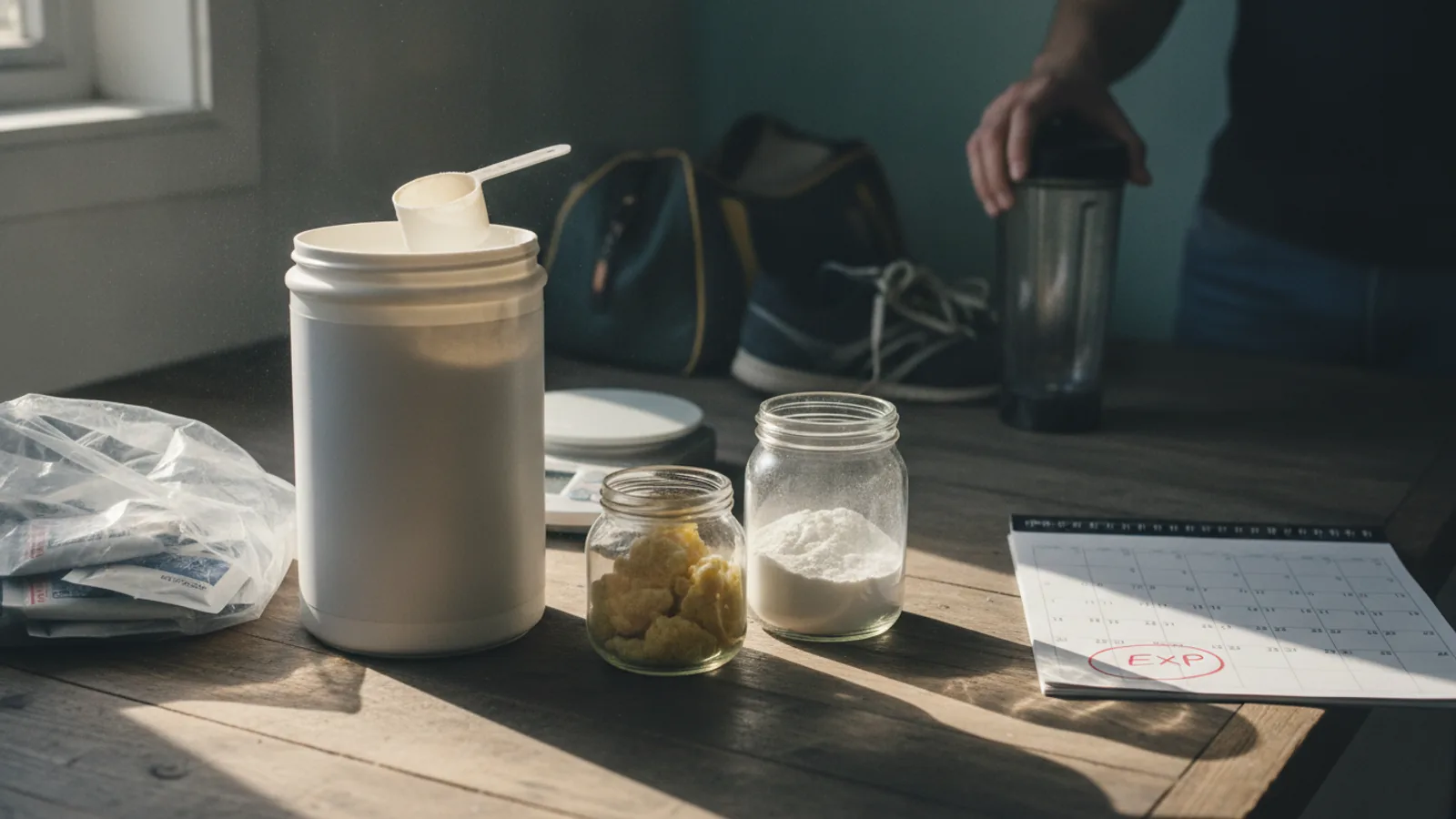
First, find the date printed on the container, which is usually on the bottom or side. This is typically a "best by," "use by," or "best before" date. It's important to understand what this date means. It's a manufacturer's guarantee of peak quality, flavor, and nutritional value, not a strict expiration date for safety.
For most sealed, dry goods like protein powder, the product can remain safe to consume long after this date has passed, provided it has been stored correctly. Most protein powders, including whey, casein, and plant-based varieties, are manufactured to have a shelf life of 18 to 24 months. An unopened tub stored in ideal conditions can easily last another year beyond that date without significant safety concerns, though its quality may begin to decline.
Step 2: Visually Inspect the Powder
Open the container in a well-lit room and take a close look at the powder. Your eyes are the first line of defense against spoilage. You are looking for any deviation from how the product looked when you first opened it.
Pay close attention to these three things:
- Color: The color should be uniform. If you see any dark spots, discolored patches, or specks of green, black, or white fuzz, this is a clear sign of mold or mildew. The powder should be discarded immediately.
- Clumps: While some minor, dusty clumps can form due to static electricity, you should be wary of large, hard, or damp clumps. This indicates that moisture has gotten into the container, which creates an ideal environment for bacteria and mold to grow.
- Foreign Objects: Check for anything that doesn't belong. This is rare but can happen if the seal was compromised.
Step 3: Perform a Smell Test
Your sense of smell is incredibly effective at detecting spoilage. Bring the container close to your nose and take a gentle sniff. A fresh protein powder should smell neutral or have a pleasant, faint scent matching its flavor (e.g., vanilla, chocolate).
If the powder has gone bad, you will likely notice a distinct and unpleasant odor. Be alert for smells that are sour, musty, rancid, or chemical-like. A sour smell often indicates bacterial growth, while a rancid smell (like old cooking oil) means the fats within the powder have oxidized and gone bad. If it smells off in any way, your inspection is over. Do not consume it.
Step 4: Check the Texture
Next, assess the powder's texture. Use a clean, dry scoop or spoon to pick some up. It should feel light, dry, and powdery. It should flow easily off the spoon.
If the texture feels gritty, heavy, sticky, or damp, it confirms that moisture has compromised the product. Even if you don't see visible clumps, a damp texture is a serious warning sign. This moisture not only ruins the texture but also accelerates the degradation of the protein and invites microbial growth. Powder that has been compromised by moisture should not be used.
Step 5: Conduct a Mixability Test
If the powder has passed the visual, smell, and texture tests, the next step is to see how it behaves in liquid. The ability of protein powder to dissolve is a good indicator of its chemical integrity.
Place a single scoop into a clear shaker cup with about 8 ounces of cold water. Secure the lid and shake vigorously for 20-30 seconds. A good-quality powder should dissolve fairly well, with maybe a few small granules remaining. If the powder refuses to mix, forms stubborn clumps, or settles at the bottom like sand, its structure has likely degraded. This means it won't taste right and your body may not be able to absorb the protein effectively.
Step 6: Perform a Cautious Taste Test
This is the final check and should only be performed if the powder has passed all previous five steps. Your taste buds are a final, powerful defense against consuming something spoiled.
Prepare a very small serving—about a quarter of a scoop mixed with a few ounces of water. Take a tiny sip. The taste might be a little stale or less vibrant than you remember, which is normal for older powder. However, if you detect any flavors that are distinctly sour, bitter, metallic, or just plain foul, spit it out immediately and discard the rest of the powder. A bad taste is a definitive sign that the powder is no longer good.
Quick Reference
Use this table as a quick cheat sheet for making a final decision on your protein powder's status.
| Situation | Decision | Why |
|---|---|---|
| The powder has visible mold or dark spots. | Discard immediately | Mold and bacteria can make you sick. |
| It smells sour, rancid, or musty. | Discard immediately | This indicates bacterial growth or fat oxidation. |
| It has large, hard, or damp clumps. | Discard immediately | Moisture has gotten in, creating a breeding ground for germs. |
| It's past the "best by" date but looks and smells perfectly fine. | Proceed with caution | It's likely safe but may have lost some flavor and nutritional potency. |
| It won't mix into water properly. | Best to discard | The protein has degraded and won't be as effective or palatable. |
Common Problems When Checking Protein Powder
Sometimes the signs aren't perfectly clear. Here’s how to handle a few common, ambiguous situations.
Small, Dry Clumps Are Present
If you notice a few small clumps that easily break apart with a light touch from your scoop, this is usually not a cause for concern. It's often due to static electricity inside the plastic tub, which makes the fine powder stick together. As long as the clumps are not damp, hard, or discolored, the powder is likely fine.
The Flavor Seems Weaker or Stale
If your powder passes all the safety checks but the flavor just isn't as rich or sweet as you remember, it means the flavoring agents have degraded over time. This is a quality issue, not a safety one. The protein is still usable, but it might not be as enjoyable to drink. You could try mixing it into a smoothie with other flavorful ingredients like fruit or peanut butter to mask the staleness.
The "Best By" Date Is Unreadable
If the date has rubbed off or is otherwise unreadable, you lose that data point. In this case, you must rely entirely on the sensory checks outlined in the steps above. Be extra critical in your inspection. If you have any doubt whatsoever about its age or storage history, the safest course of action is to replace it.
Advanced Tips for Extending Protein Powder Shelf Life
The best way to deal with old protein powder is to prevent it from going bad in the first place. Proper storage is everything. Follow these tips to maximize its freshness and lifespan.
1. Choose the Right Storage Location
The three enemies of protein powder are heat, light, and moisture. The ideal storage spot is a cool, dark, and dry place. A pantry or kitchen cupboard away from the stove, oven, and sink is perfect. Avoid storing it on a countertop in direct sunlight, in a car, or in the refrigerator or freezer, where condensation can introduce moisture.
2. Keep It in Its Original Container
The opaque, airtight tubs that protein powder comes in are specifically designed for optimal storage. They block light and have tight-sealing lids to keep out air and moisture. Avoid the temptation to transfer it to a stylish, clear glass jar, as this exposes the powder to light, which can accelerate nutrient degradation.
3. Always Use a Completely Dry Scoop
This is a critical habit. Never, ever introduce a wet or even slightly damp scoop into your protein powder tub. That small amount of moisture is all it takes to create clumps and start the spoilage process. Always wash and thoroughly dry the scoop before returning it to the container, or store it separately.
4. Buy the Right Size for Your Usage
It can be tempting to buy the biggest, most economical tub of protein powder available. However, if you only use it occasionally, a large tub might sit around for over a year after being opened. Consider your consumption rate. If it takes you more than six months to finish a tub, you might be better off buying a smaller size to ensure you're always using a fresher product.
How Long Does Protein Powder Last FAQ
Does protein powder lose potency or effectiveness over time?
Yes, it can. Over time, especially after the "best by" date, protein powder can undergo something called the Maillard reaction. This is a chemical reaction between amino acids and sugars that can make the protein less digestible and bioavailable. While it won't become harmful, an old powder may provide less nutritional benefit than a fresh one. This degradation is accelerated by heat and moisture.
Can old protein powder make you sick?
Yes, absolutely. If the powder has been contaminated with moisture, it can grow bacteria, yeast, or mold. Consuming spoiled protein powder can lead to digestive issues like stomach cramps, nausea, and diarrhea, similar to other forms of food poisoning. This is why following the sensory inspection steps is so critical.
Is there a shelf-life difference between whey, casein, and plant-based powders?
For the most part, their shelf lives are very similar, typically falling within the 18-24 month range from the date of manufacture. However, some plant-based powders that contain added ground seeds (like flax or chia) or other fats might have a slightly shorter peak quality window, as these natural fats can go rancid faster than the protein itself degrades.
How long does a mixed protein shake last?
Once you mix protein powder with liquid, its shelf life shortens dramatically. You should treat it like any other perishable drink, such as milk. For best taste and safety, consume a mixed shake within two hours if left at room temperature. If you refrigerate it immediately, it can last for up to 24-48 hours, though the texture and flavor may change.
What if my brand new, sealed protein powder has some clumps?
This is usually not a problem. Minor clumping in a brand-new, factory-sealed container is often caused by static electricity and the powder settling during shipping. As long as the seal was intact and the clumps are dry and break apart easily, the product is perfectly safe and effective to use.
Final Checklist for Protein Powder Safety
Use this final checklist to confirm you've done a thorough inspection before using that older tub of protein powder.
- Checked the "best by" date as a starting reference point.
- Inspected the powder for any signs of mold, discoloration, or foreign objects.
- Smelled the powder for any sour, rancid, or musty odors.
- Felt the texture to ensure it's dry and not sticky or damp.
- Verified that it mixes properly in liquid without forming stubborn clumps.
- Performed a final, cautious taste test only after it passed all other checks.
- Confirmed the powder has been stored in a cool, dry, dark location.
- Remembered the most important rule: when in doubt, throw it out.