How To Stretch Bum Muscles
A practical step-by-step guide to how to stretch bum muscles, including preparation, instructions, common issues, tips, and next steps.
How To Stretch Bum Muscles
Tight bum muscles, or glutes, are a common issue that can lead to discomfort in your hips, lower back, and even down your legs. This guide provides clear, step-by-step instructions for safely and effectively stretching your gluteal muscles. Whether you spend hours sitting at a desk, are an active athlete, or simply feel stiffness in your hips, these stretches will help you improve flexibility, reduce tension, and promote better overall movement. Following these steps can help alleviate pain and prevent future injuries.
Fast Answer
- Key Stretch: Seated Figure-Four or Supine Figure-Four
- Hold Time: Hold each stretch for 20-30 seconds
- Frequency: Perform daily, especially after long periods of sitting or exercise
- Sensation: Aim for a gentle, deep pulling sensation, not sharp pain
Before You Start
Proper preparation is key to a safe and effective stretching routine. Before you begin, take a moment to gather what you need and understand the basic safety principles. This ensures you get the most benefit without risking injury.
- A comfortable surface: Use a yoga mat, a soft rug, or a carpeted area to cushion your body, especially for floor-based stretches.
- Comfortable clothing: Wear clothes that allow you to move freely without restriction. Athletic wear or loose-fitting garments are ideal.
- A stable chair (optional): For seated stretches, you'll need a sturdy chair that allows your feet to rest flat on the floor.
- A wall or sturdy object (optional): This can be used for balance and support during certain stretches.
Step-by-Step Instructions
Your glutes are a powerful group of three muscles: the gluteus maximus, medius, and minimus. Tightness in any of these can affect your posture and comfort. This routine includes several stretches to target them from different angles.
Warm Up Your Muscles
Never stretch cold muscles. A proper warm-up increases blood flow to the muscles, making them more pliable and less susceptible to injury. A cold muscle is like a stiff rubber band; it's more likely to snap if stretched too far. Warming up prepares your body for the movements to come.
Perform 3-5 minutes of light cardiovascular activity. This doesn't need to be intense. The goal is simply to raise your body temperature slightly. Good options include:
- Marching in place
- Gentle butt kicks
- Walking around the room
- Arm circles and torso twists
- Leg swings (forward-and-back and side-to-side)
Once you feel slightly warmer and your heart rate is elevated a bit, you are ready to begin stretching.
Perform the Seated Piriformis Stretch
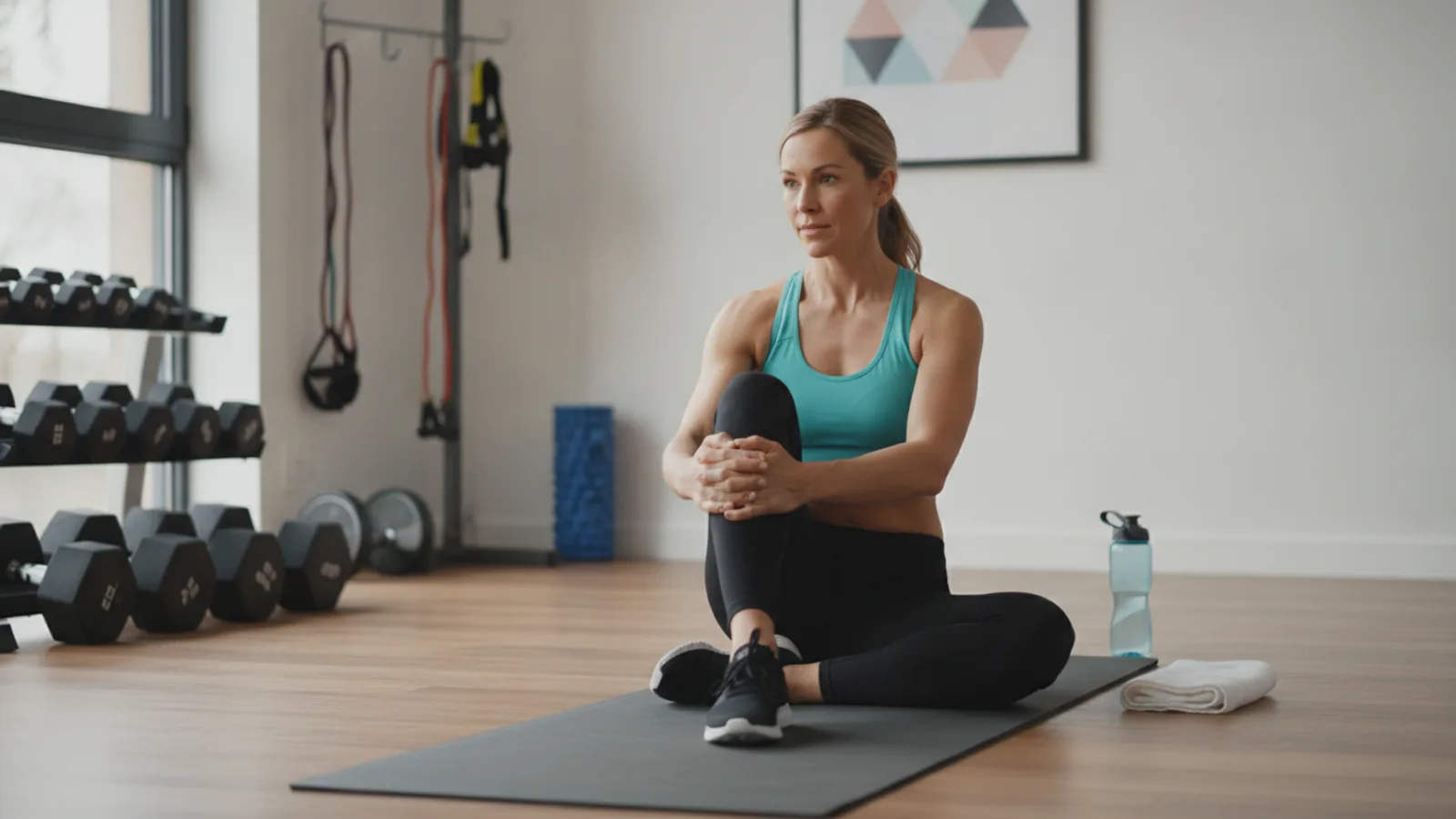
This is an excellent stretch to do at the office or anywhere you have a chair. It targets the piriformis muscle, a small muscle deep within the glutes that can contribute to hip and sciatic nerve pain when tight.
- Sit upright in a sturdy chair with your back straight and your feet flat on the floor.
- Lift your right foot and cross your right ankle over your left knee, creating a "figure four" shape with your legs.
- Keep your right foot flexed (toes pointing towards your shin) to help protect your knee joint.
- Place your right hand gently on your right knee. Sit tall, lengthening your spine.
- To begin the stretch, gently hinge forward at your hips, keeping your back straight. Avoid rounding your spine.
- As you lean forward, you can apply very light pressure to your right knee with your hand to deepen the stretch. You should feel a pull deep in your right glute.
- Hold this position for 20-30 seconds, breathing deeply and evenly.
- Slowly return to the starting position and repeat on the other side.
Try the Supine Figure-Four Stretch
This stretch targets the same muscles as the seated version but allows for greater relaxation and support for your back, as you perform it lying down. It is often a preferred option for those with lower back sensitivity.
- Lie on your back on a comfortable, flat surface. Bend both knees and place your feet flat on the floor, about hip-width apart.
- Cross your right ankle over your left thigh, just above the knee. Keep your right foot flexed to protect the knee.
- This position may already provide a gentle stretch. If you want to deepen it, proceed to the next step.
- Slowly lift your left foot off the floor, bringing your left knee toward your chest.
- Reach through the space between your legs with your right hand and around the outside of your left leg with your left hand. Clasp your hands behind your left thigh.
- Gently pull your left thigh toward your chest until you feel a comfortable stretch in your right glute and hip area.
- Keep your head, neck, and shoulders relaxed on the floor. If your head lifts, place a small pillow or folded towel under it for support.
- Hold for 20-30 seconds while breathing deeply. Release and switch sides.
Execute the Pigeon Pose
Pigeon Pose is a classic yoga posture that provides a deep stretch for the glutes, piriformis, and hip flexors. It's highly effective but requires care, especially for those with sensitive knees. Always move into this pose slowly and mindfully.
- Start on your hands and knees in a tabletop position.
- Bring your right knee forward and place it on the floor behind your right wrist. Your right shin will now be on the floor, angled diagonally across your body. The more parallel your shin is to the front of your mat, the more intense the stretch will be. Beginners should start with their right foot closer to their left hip.
- Carefully extend your left leg straight back behind you, with the top of your foot and your kneecap resting on the floor.
- Square your hips toward the front. Try not to lean onto your right hip; keep your weight evenly distributed. You can place a yoga block or folded blanket under your right hip for support if needed.
- Stay upright on your hands, pressing your fingertips into the floor to lengthen your spine. You should feel a deep stretch in your right outer hip.
- If you feel comfortable, you can deepen the stretch by walking your hands forward and lowering your torso over your front leg. Rest on your forearms or stack your hands and rest your forehead on them.
- Hold for 30-60 seconds. To exit the pose, walk your hands back, tuck your back toes, and gently press back into the tabletop position before switching sides.
Do the Kneeling Lunge Stretch
While often considered a hip flexor stretch, a kneeling lunge can also effectively stretch the glute of the back leg when performed with a slight modification. It helps release tension that builds up from sitting.
- Kneel on the floor. You may want to place a folded towel or mat under your back knee for comfort.
- Step your right foot forward so your right knee is directly above your right ankle, creating a 90-degree angle. Your left knee remains on the floor behind you.
- Place your hands on your front knee or on your hips. Keep your torso upright and your core engaged.
- To stretch the hip flexor, gently press your hips forward. You'll feel this along the front of your left hip.
- To engage the glute stretch, you must activate the glute of the back leg. Squeeze your left glute muscle firmly. This tilting of the pelvis will deepen the stretch in the front of your hip and also create a stretch within the glute itself.
- Hold the position with the glute engaged for 20-30 seconds.
- Release and carefully switch to the other side.
Cool Down and Breathe
After completing your stretches on both sides, take a moment to cool down. Don't just jump up and rush off. A brief cooldown allows your heart rate to return to normal and gives your nervous system time to integrate the benefits of the stretches.
- Finish your routine by lying on your back for a minute or two. You can hug both knees into your chest to gently release the lower back.
- Rock gently from side to side if it feels good.
- Focus on deep, diaphragmatic breathing. Inhale slowly through your nose, allowing your belly to rise, and exhale slowly through your mouth.
- When you're ready to get up, roll onto your side first and use your hands to press yourself up to a seated position, then stand. This is gentler on your back than sitting straight up.
Consistency is more important than intensity. A gentle, daily 5-minute routine is far more beneficial than one intense, painful session per week.
Quick Reference
| Situation | Use this | Why |
|---|---|---|
| Stuck at your desk | Seated Piriformis Stretch | It's discreet, requires only a chair, and effectively targets deep glute muscles that tighten from prolonged sitting. |
| After a run or workout | Pigeon Pose | It provides a very deep stretch for the glutes and hip rotators, which work hard during high-impact activities. |
| Feeling lower back tightness | Supine Figure-Four Stretch | It releases the piriformis and glutes (which can pull on the lower back) while keeping your spine in a safe, supported position. |
| General morning stiffness | Kneeling Lunge Stretch | It gently opens the hips and activates the glutes, preparing your body for the day's movements. |
Common Problems When You Stretch Bum Muscles
Even with simple stretches, you can run into issues. Here’s how to troubleshoot some common problems to ensure you’re stretching safely and effectively.
I don't feel the stretch in my bum.
This is a frequent issue, often caused by incorrect form or compensation from other muscles. If you feel the stretch more in your back or hamstring, your positioning is likely off.
Solution:
- Focus on your posture. In seated stretches, keep your back long and straight. The movement should be a hinge from your hips, not a rounding of your spine.
- Adjust your angle. In a Figure-Four or Pigeon pose, changing the angle of your shin or how close you pull your leg to your chest can dramatically alter where you feel the stretch. Experiment with small adjustments.
- Engage your core. A stable core helps isolate the stretch to the hip and glute area, preventing your lower back from taking over.
My knee hurts during the stretch.
Knee pain, especially in Figure-Four or Pigeon Pose, is a red flag. It usually means there is torque or pressure on the knee joint that shouldn't be there.
Solution:
- Flex your foot. On the leg being stretched, actively flex your foot by pulling your toes back toward your shin. This engages the muscles around the shin and knee, stabilizing and protecting the joint.
- Reduce the intensity. Don't pull as deeply into the stretch. Ease off until the knee pain disappears, even if it means the glute stretch is less intense.
- Switch to a different stretch. If a particular pose consistently causes knee pain, it may not be right for your body. The Supine Figure-Four is often the safest option for sensitive knees.
I'm not flexible enough to get into the pose.
Flexibility varies greatly from person to person. Never force your body into a position it's not ready for. The goal is to feel a gentle stretch, not to replicate a picture perfectly.
Solution:
- Use props. In Pigeon Pose, place a yoga block, cushion, or folded blanket under the hip of your bent leg for support. This elevates your hips and makes the pose more accessible. In a Supine Figure-Four, you can loop a towel or yoga strap around your thigh to help pull it in if you can't reach with your hands.
- Shorten the hold time. Start by holding the stretch for just 10-15 seconds. As your flexibility improves over time, you can gradually increase the duration.
- Stay consistent. Small, consistent efforts yield the best results. A few minutes of gentle stretching each day will improve your flexibility more than one long, aggressive session.
Advanced Tips for Stretching Bum Muscles
Once you've mastered the basic stretches, you can incorporate more advanced techniques to deepen the release and improve your results.
- Incorporate PNF Stretching: Proprioceptive Neuromuscular Facilitation (PNF) is a technique that can create a deeper stretch. While in a stretch (like the Supine Figure-Four), gently try to contract the muscle being stretched for 5-6 seconds without actually moving (this is an isometric contraction). For the glute, you would gently press your crossed ankle into your opposite thigh. Then, consciously relax the muscle and breathe out, allowing yourself to sink a little deeper into the stretch. Repeat 2-3 times.
- Focus on 360-Degree Breathing: Pay close attention to your breath. Instead of shallow chest breathing, practice deep diaphragmatic breathing. As you inhale, imagine your rib cage expanding in all directions—front, sides, and back. As you exhale, let go of tension. This type of breathing calms the nervous system, which signals your muscles that it's safe to relax and lengthen.
- Combine Stretching with Strengthening: Sometimes, muscles feel "tight" because they are weak, not just short. The brain can create a sensation of tightness to protect an unstable area. Complement your stretching routine with glute-strengthening exercises like glute bridges, clamshells, and bodyweight squats. A balanced approach of both strengthening and stretching often yields the best long-term results for hip health.
How To Stretch Bum Muscles FAQ
How often should I stretch my bum muscles?
Should I stretch before or after a workout?
Why are my bum muscles always so tight?
Can stretching my glutes help with lower back pain?
Final Checklist for Stretching Bum Muscles
Use this checklist to ensure you're performing your stretching routine safely and effectively every time.
- Did you warm up? Spend 3-5 minutes on light cardio before starting your stretches.
- Did you choose the right stretch? Select a pose that feels appropriate for your body and flexibility level today.
- Did you hold it long enough? Aim for a 20-30 second hold for each static stretch to allow the muscle fibers to relax and lengthen.
- Did you breathe? Focus on deep, steady breathing throughout each stretch. Never hold your breath.
- Did you listen to your body? Back off immediately if you feel any sharp, shooting, or pinching pain.
- Did you stretch both sides? Ensure you hold the stretch for an equal amount of time on both your left and right sides to maintain balance.