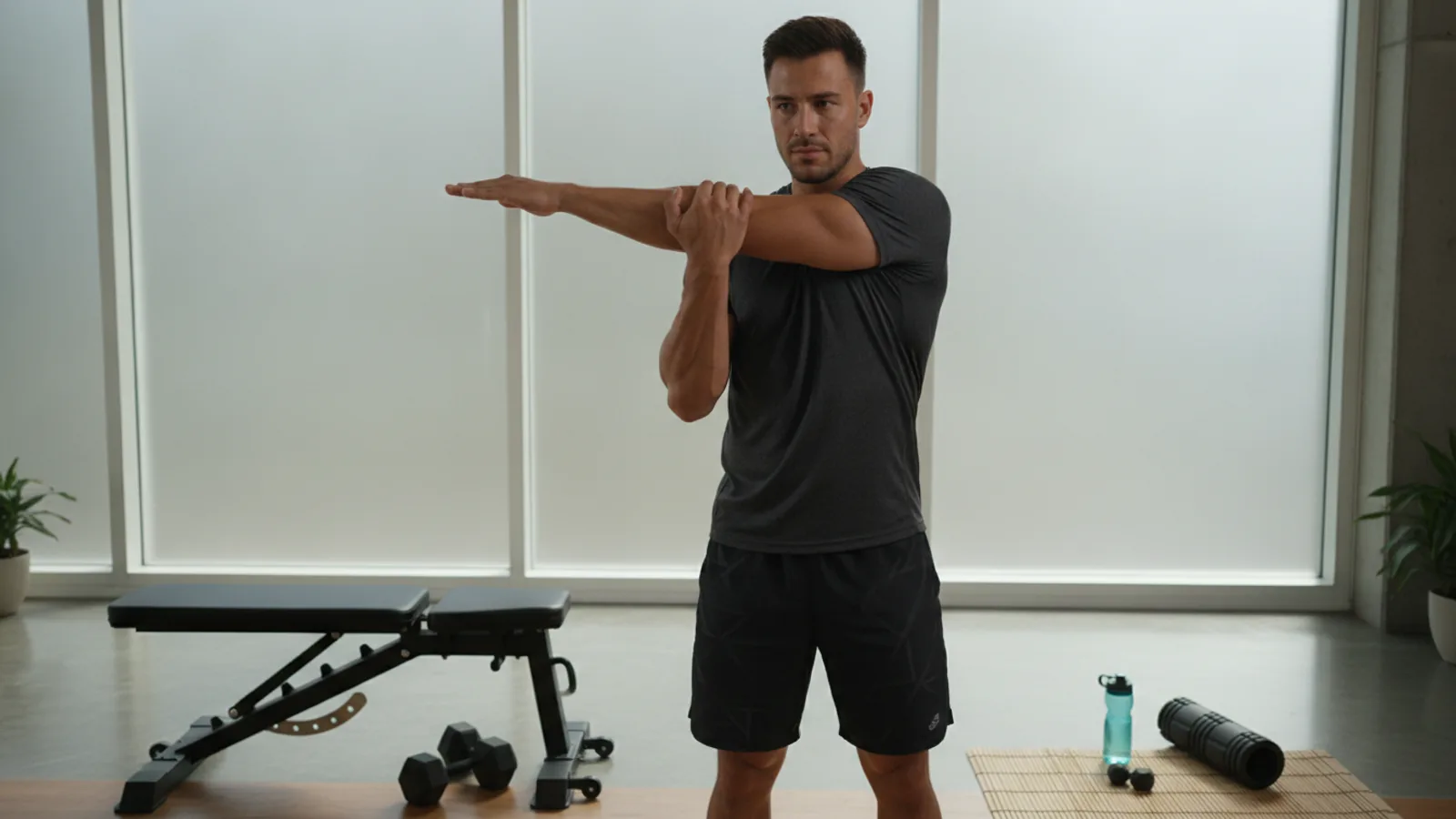
How To Stretch Quadriceps Muscles
A practical step-by-step guide to how to stretch quadriceps muscles, including preparation, instructions, common issues, tips, and next steps.
How To Stretch Quadriceps Muscles
Stretching your quadriceps muscles is a key part of maintaining flexibility, preventing injuries, and improving overall mobility. This guide provides clear, step-by-step instructions for safely and effectively stretching the quads, which are the large muscles at the front of your thighs. Whether you're an athlete, spend a lot of time sitting, or just want to feel better, learning these stretches will help you ease muscle tightness and enhance your physical well-being. This guide is perfect for anyone looking to add effective quad stretches to their routine.
Fast Answer
- Primary Goal: Improve flexibility and reduce tightness
- Key Action: Gently pull your heel towards your glutes
- Hold Time: 20-30 seconds per stretch
- Repetitions: 2-3 times per leg
Before You Start
- **Warm-up:** Always perform quadriceps stretches after a light warm-up (e.g., 5-10 minutes of walking or light cardio) or at the end of a workout when your muscles are warm. Stretching cold muscles can increase the risk of injury.
- **Comfortable Clothing:** Wear clothing that allows for a full range of motion without restricting your movements.
- **Clear Space:** Ensure you have enough room to move freely without bumping into furniture or objects. For some stretches, you might need a wall or sturdy chair for balance.
- **Listen to Your Body:** Stretching should feel like a gentle pull, not sharp pain. If you feel any pain, ease up or stop the stretch immediately.
Step-by-Step Instructions
Prepare Your Body and Environment
Before beginning any quadriceps stretches, it's crucial to ensure your body is ready and your environment is safe. As mentioned, your muscles should be warm, either from a light warm-up or after your main exercise routine. This increases muscle elasticity and makes stretching more effective and safer. Find a quiet spot where you won't be interrupted and have enough space to move. If you're new to stretching or have balance concerns, make sure a sturdy object like a wall or a chair is nearby to hold onto.
Take a few deep breaths to help your body relax. Mental preparation is just as important as physical preparation for a good stretch. Focus on what you're about to do and be mindful of your body's signals throughout each movement.
Perform the Standing Quadriceps Stretch
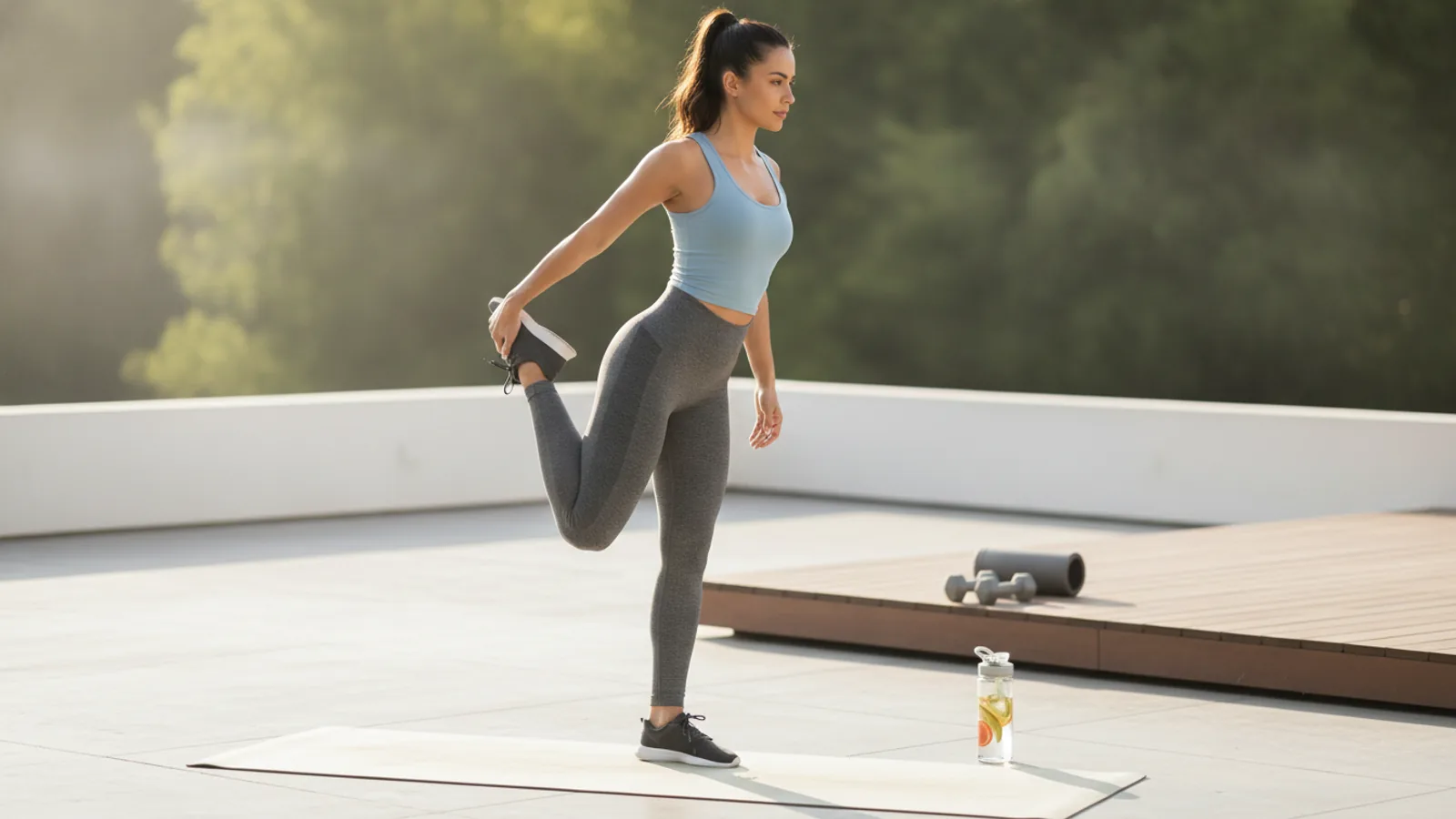
The standing quadriceps stretch is one of the most common and effective ways to target the front of your thigh. Begin by standing upright with your feet hip-width apart. If you need balance, hold onto a wall, chair, or sturdy surface with one hand. Shift your weight slightly onto your left leg, ensuring it is slightly bent at the knee, not locked straight.
With your right hand, reach back and grasp your right ankle or the top of your right foot. Gently pull your heel towards your glutes (buttocks). As you pull, try to keep your knees close together and your hips pointing straight forward, not twisting. You should feel a stretch along the front of your right thigh. Avoid arching your lower back; instead, try to tuck your tailbone slightly under to keep your spine neutral.
Hold this position for **20 to 30 seconds**, breathing deeply and steadily. After holding, slowly release your foot and return to the starting position. Repeat on the left side, shifting your weight to your right leg and pulling your left heel towards your glutes with your left hand. Aim for **2-3 repetitions** on each leg.
Try the Lying Side Quadriceps Stretch
This variation offers a different angle of stretch and can be more comfortable for some, especially if balance is a concern. Begin by lying on your side on a mat or soft surface. You can use your bottom arm to support your head or rest your head on a pillow. Ensure your body is in a relatively straight line, as if you're lying on your side along a wall.
Bend your top knee and reach back with your top hand to grasp your ankle or the top of your foot. Gently pull your heel towards your glutes, just as you would in the standing version. Keep your hips stacked directly on top of each other, avoiding rolling your top hip forward or backward. You should feel a stretch along the front of your thigh. Make sure your knee is pointing directly behind you, not up towards the ceiling.
Hold the stretch for **20 to 30 seconds**, focusing on your breath. Slowly release your foot and relax. Then, roll over to your other side and repeat the stretch with the other leg. Perform **2-3 repetitions** on each leg.
Execute the Kneeling Quadriceps Stretch
The kneeling quadriceps stretch provides a deeper stretch for many and can be particularly useful for those who struggle with standing balance. Start by kneeling on a soft surface, such as a yoga mat, with one knee on the ground and the other foot flat on the ground in front of you, forming a 90-degree angle at both knees (like a lunge position).
For example, if your right knee is on the ground, reach back with your right hand and grasp your right ankle or foot. Gently pull your heel towards your glutes. To increase the stretch, you can gently lean your torso forward slightly, pushing your hips forward. Keep your back straight and avoid arching your lower back excessively. Focus on feeling the stretch along the front of the thigh of the kneeling leg.
Hold this stretch for **20 to 30 seconds**. Release slowly and switch legs, placing your left knee on the ground and repeating the movement with your left hand and left foot. Complete **2-3 repetitions** on each side. If kneeling directly on the floor is uncomfortable, place a folded towel or extra padding under your kneeling knee.
Master Your Form for Optimal Results
Regardless of the specific quadriceps stretch you choose, proper form is essential for both effectiveness and safety. Always engage your core muscles slightly to help stabilize your torso and prevent excessive arching of the lower back. This means gently pulling your belly button towards your spine without holding your breath.
Pay close attention to your knee and hip alignment. For all quadriceps stretches, try to keep your knees in line with your hips and shoulders, avoiding letting them splay out to the side or cave inwards. Your hips should generally face forward, without twisting. If you find your hips twisting significantly to reach your foot, you might be overstretching or need to use a towel for assistance.
Remember that consistency is more important than intensity. A gentle, consistent stretch held for the recommended duration will yield better results over time than forcing a deep, painful stretch sporadically. Over time, as your flexibility improves, you might find you can go a little deeper into the stretch.
Quick Reference
| Situation | Use this Stretch | Why |
|---|---|---|
| General flexibility & warm-down | Standing Quadriceps Stretch | Easy to perform, good for all levels, and effective for daily maintenance. |
| Balance challenges or knee sensitivity | Lying Side Quadriceps Stretch | Provides more support for the body, reducing balance demands and potential knee pressure. |
| Deeper stretch needed for front of thigh | Kneeling Quadriceps Stretch | Often allows for a more intense stretch by enabling better hip flexor engagement. |
| Cannot reach foot with hand | Any stretch with a towel/strap | Allows you to safely grab and pull your foot without overextending your arm or back. |
| Feeling a pinch or pain in knee | Ease off, reduce depth, or try Lying Side Stretch | Pain means you're going too far. Lying on your side can reduce direct knee pressure. |
Common Problems When You Stretch Quadriceps Muscles
Stretching your quadriceps should feel beneficial, but sometimes you might encounter issues. Knowing how to address these can make your routine more effective and prevent frustration.
- Not feeling the stretch: If you're not feeling a good stretch, first check your form. Are your hips pushing forward (instead of tucking under)? Are your knees close together? Sometimes, simply adjusting your body position slightly can make a big difference. For example, in the standing stretch, if you're arching your lower back, it lessens the stretch on the quads. Try to gently tuck your tailbone. You might also need to use a deeper stretch like the kneeling version if you have good flexibility.
- Feeling pain in your knee: This is a common concern. If you feel sharp pain in your knee, you are likely pulling too hard or twisting your knee incorrectly. Ensure you are pulling your foot directly towards your glutes, and your knee points straight back. Never force the stretch. If the pain persists, try the lying side quadriceps stretch, which often puts less direct pressure on the knee joint. If the pain continues, consult a healthcare professional.
- Losing balance: The standing quadriceps stretch can be challenging for balance. Always use a wall, chair, or a partner for support if needed. Don't be afraid to hold on firmly. The lying side stretch is an excellent alternative if balance is a significant issue for you, as it removes the balance component entirely.
- Difficulty reaching your foot: Many people find it hard to grasp their foot or ankle. This is perfectly normal, especially when starting. Use a towel, strap, or resistance band looped around your ankle. Hold the ends of the towel and gently pull your foot towards your glutes. This allows you to control the intensity without straining your arms or back.
- Muscle cramping during the stretch: Cramping can sometimes occur, especially if you are dehydrated or have an electrolyte imbalance. Ensure you're drinking enough water throughout the day. If a cramp occurs, immediately release the stretch, gently massage the muscle, and hydrate. Only resume stretching when the cramp has fully subsided.
Advanced Tips for How To Stretch Quadriceps Muscles
Once you've mastered the basic quadriceps stretches, you can incorporate a few advanced techniques to deepen your flexibility and improve results.
- Increase Hold Time Gradually: While 20-30 seconds is a good starting point, for greater flexibility gains, you can gradually increase your hold time to 45-60 seconds per stretch. Only do this if you feel comfortable and don't experience any pain. Longer holds allow the muscle to relax and lengthen more effectively.
- Focus on Breathing: Deeper, slower breathing can significantly enhance your stretches. On your exhale, try to relax deeper into the stretch. Imagine the tension leaving your muscles as you breathe out. This helps to quiet your nervous system and allows muscles to release more effectively.
- Integrate PNF Stretching (Proprioceptive Neuromuscular Facilitation): This advanced technique involves contracting the muscle you're stretching before relaxing into a deeper stretch. For a quadriceps stretch, after holding for 20 seconds, gently try to push your foot away from your hand (contracting your quad) for 5-7 seconds. Then, relax the muscle and immediately try to pull your heel closer to your glutes for another 20-30 seconds. This method can significantly improve flexibility but should be done carefully.
- Combine with Hip Flexor Stretches: The quadriceps muscles often work closely with the hip flexors (muscles at the front of your hip) and can contribute to tightness. Incorporating stretches for your hip flexors, such as the kneeling hip flexor stretch, can provide a more comprehensive approach to lower body flexibility and help ease quad tightness.
- Consistency is Key: Even with advanced techniques, the most important factor for improving flexibility is consistency. Aim to stretch your quadriceps at least **3-5 times a week**, ideally after your workouts or as a dedicated stretching session when your muscles are warm. Short, consistent sessions are more effective than infrequent, intense ones.
- Vary Your Stretches: Don't stick to just one quadriceps stretch. By rotating through the standing, lying, and kneeling variations, you can target the different heads of the quadriceps muscle more comprehensively and prevent your body from adapting too much to one specific movement.
How To Stretch Quadriceps Muscles FAQ
Here are answers to some frequently asked questions about stretching your quadriceps muscles.
Q: How often should I stretch my quadriceps?
A: For general flexibility, aiming for **3-5 times a week** is a good target. If you're very active or have noticeable tightness, you might stretch daily, always ensuring your muscles are warm before you begin.
Q: When is the best time to stretch my quads?
A: The ideal time is when your muscles are warm. This is typically **after a workout** or following a light warm-up like a 5-10 minute walk or jog. Stretching cold muscles is less effective and increases injury risk.
Q: What are the benefits of stretching the quadriceps?
A: Stretching your quadriceps can help improve your overall flexibility, increase your range of motion, reduce muscle soreness and stiffness, prevent injuries (especially those related to tight hip flexors and knees), and improve posture.
Q: Can stretching help with knee pain?
A: Sometimes, yes. Tight quadriceps can pull on the kneecap, contributing to certain types of knee pain. Gently stretching them can relieve this tension. However, if you have persistent or severe knee pain, it's essential to consult a doctor or physical therapist before starting any new stretching routine.
Q: Should I feel pain when stretching?
A: No, stretching should never cause sharp or intense pain. You should feel a gentle, comfortable pull or tension in the muscle. If you feel pain, ease up on the stretch immediately. Pain is your body's signal that something is wrong.
Q: What if I have trouble balancing during standing stretches?
A: It's common to struggle with balance initially. Always use a wall, chair, or sturdy object for support. Alternatively, try the lying side quadriceps stretch, which requires no balance and can be just as effective.
Final Checklist for How To Stretch Quadriceps Muscles
Before concluding your quadriceps stretching session, quickly review these points to ensure you've performed them safely and effectively.
- Did you **warm up** adequately before stretching? (Crucial for safety and effectiveness)
- Did you perform **2-3 repetitions** for each leg? (Ensures adequate muscle lengthening)
- Was each stretch held for **20-30 seconds** (or longer if comfortable)? (Provides sufficient time for muscles to relax and lengthen)
- Did you maintain **proper form** for each stretch, keeping knees aligned and hips facing forward? (Maximizes effectiveness and prevents injury)
- Did you **avoid bouncing** at any point during the stretches? (Prevents muscle reflex tightening and injury)
- Did you **listen to your body** and stop if you felt any sharp pain? (Prioritizes safety over intensity)
- Did you **breathe deeply and consistently** throughout the stretches? (Aids relaxation and muscle release)
- Are you planning to incorporate quadriceps stretching into your routine **regularly**? (Consistency is key for long-term flexibility gains)
What should I check before acting on advice about how to stretch quadriceps muscles?
Use this guide as a starting point, compare current specifications and costs, and check the details that apply to your own situation before making a purchase or booking.
Where can I find related recovery guidance?
Browse the related guides in this section for practical comparisons, planning notes, and next steps that support the same decision.